

EMS HYBRID REFRESHERS PACKAGE at First In Last Out Medical Response 3322 Coors Blvd NW Suite 4 Albuquerque, NM 87120
$450.00
National Association of Emergency Medical Technicians NAEMT
FIRST IN LAST OUT MEDICAL RESPONSE CERTIFICATIONS 3322 COORS BLVD NW SUITE 4 ALBUQUERQUE, NM 87120 GERARDO REYES (505) 358-1197
Free BLS Certification with every ACLS or Pals Course

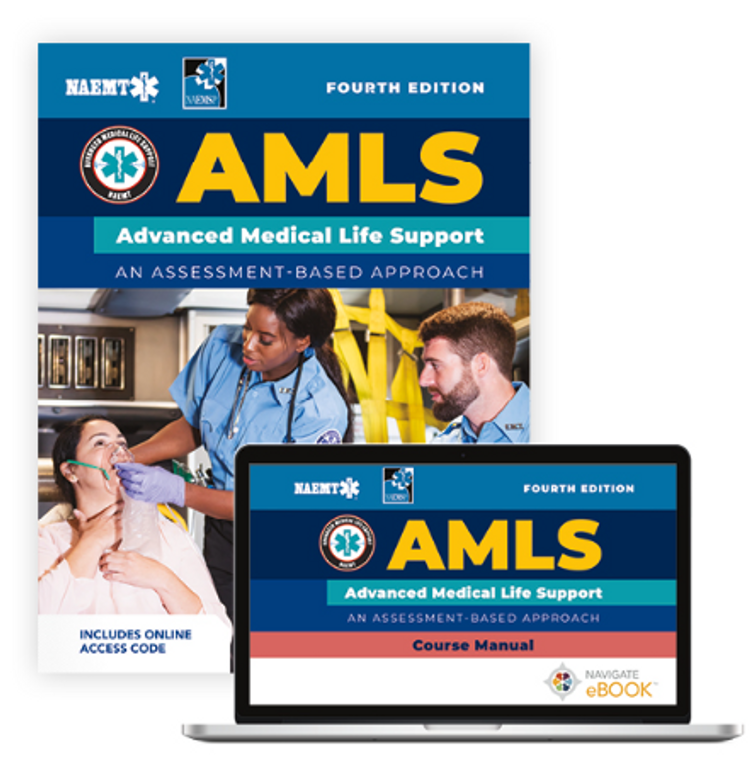
Advanced Medical Life Support (AMLS) at First In Last Out Medical Response (505) 358-1197
3322 Coors Blvd NW Suite 4 Albuquerque, NM 87120
(E-Book and FREE Basic Life Support Included!)
Advanced Medical Life Support (AMLS) remains the gold standard of education for emergency medical assessment and treatment. Endorsed by the National Association of EMS Physicians, AMLS emphasizes the use of the AMLS Assessment Pathway, a systematic tool for assessing and managing common medical conditions with urgent accuracy.
In the fourth edition of AMLS, students learn to recognize and manage common medical crises through realistic case-based scenarios that challenge students to apply their knowledge to highly critical patients. The course emphasizes the use of scene size-up, first impression, history, detailed physical assessment, and interactive group discussion on differential diagnosis and potential treatment strategies to systematically rule out and consider possibilities and probabilities in treating patients’ medical crises. The fourth edition AMLS library of over 75 patient simulations offers students an opportunity to apply critical thinking skills to a variety of patient presentations. Additional features include patient simulation monitor images and ECGs provided by iSimulate, to enhance students’ experience.
The course utilizes the AMLS textbook and course manual, and covers the following topics:
AMLS is appropriate for EMTs, advanced EMTs, paramedics, nurses, nurse practitioners, physician assistants, nurse anesthetists, and physicians. AMLS is accredited by CAPCE and recognized by NREMT.
The following AMLS courses are offered to address the needs of providers and instructors:
Provider Course: 16-hour course for EMTs, paramedics, nurses, physician assistants, nurse practitioners and physicians. Upon successful completion of the course, students receive a certificate of completion, a wallet card recognizing them as AMLS providers for 4 years, and 16 hours of CAPCE credit. This course may be offered as a classroom course, or a hybrid course where students take 8 hours of the course online followed by 8 hours in the classroom.
Refresher Course: 8-hour course for individuals who have successfully completed the 16-hour AMLS provider course within the past four years. Current AMLS provider certificate or wallet card required. Upon successful completion of the course, students receive a certificate of completion and 8 hours of CAPCE credit.
COURSE Modules: 8-hour online module that covers the didactic portion of the course. Upon successful completion of the course, students receive a certificate of completion and 8 hours of CAPCE credit.
Instructor Update: 4-hour course for current AMLS instructors that provides a comprehensive overview of content and features of a new edition of AMLS. This course is offered in a classroom format in conjunction with EMS World Expo, and subsequently as an online course. This course is required with each new edition of AMLS to maintain current instructor status.
Chapter 1
AMLS Assessment of the Medical Patient, continues to be the anchoring
chapter for the textbook, introducing and walking the reader through the AMLS
Assessment Pathway. The content of this chapter has been intentionally streamlined,
redundancies have been removed, and some of the sections have been reorganized for
more intuitive flow.
• There is a caution not to guess or estimate a patient’s GCS score. If you are going to
use GCS rather than AVPU, assess each component accurately.
• There is a change in nomenclature of “rales” to “crackles” based on the Pulmonary
Society paper supporting the change.
• A full cranial nerve assessment is not necessary for the assessment of every patient.
Therefore, we pared down the detailed content and note that it is still important to
include as part of a stroke scale for patients with suspected stroke.
• Using the mnemonic SAMPLER to elicit patient history is an important tool. We have
noted that in patients for whom a timely intervention is key to positive patient
outcomes, the “L” in SAMPLER should capture “last known well.” Noting last oral
intake is still important to document for some patients, but we have decreased its
emphasis.
Some additions have been made to Chapter 1.
• There is more content on capturing pulse oximetry during the secondary assessment.
• A DCAP-BTLS box has been added. This refers to “deformities, contusions, abrasions, punctures/penetration, burns, tenderness, lacerations, swelling.”
• The importance of recognizing gender, racial, socioeconomic, and other biases in healthcare is emphasized.
• There is new content on understanding gender considerations for patient presentation.
In Chapter 2, Pharmacology, editors have changed the “5 Rights” of medication
administration to the “6 rights”, adding “right documentation” to the list of “right
patient, right drug, right dose, right route, and right time.” Medication safety errors still
occur but these rights and the addition of documentation help clinicians focus on improving patient safety.
• This chapter addresses the issue of medication shortages. The editors added a section highlighting how the COVID-19 pandemic is yet another example of how disasters can impact medication supply in the U.S. and globally. In fact, we are experiencing medication shortages to this day!
• At the request of a textbook reviewer, the editors have added an explanation of what compounding means and what it involves.
• This chapter also provides evidence-based content about the biases regarding sex,
race, and socioeconomic status that have been reported when treating pain in
prehospital settings.
• Tall man lettering for LASA (look alike, sound alike) drugs is introduced in this
chapter and used throughout the textbook.
• In the case study highlighting antipsychotic agents, droPERidol has been added as a
possible option, as this drug is being used more frequently by EMS clinicians.
• Using antihistamines as a management option for patients experiencing delirium
4th Edition Pharmacology
• Six Rights of Medication Administration
• Medication shortages
• Explanation of compounding
• Addressed pain management biases
• Tall man lettering for LASA drugs
• Added droPERidol as optional antipsychotic agent
• Case studies
• Expanded discussion of non-opioid choices for analgesia
Chapter 2
with agitated behavior has been removed as these are not present in the NAEMSP
position statement.
• The chapter includes 3 case studies to reinforce the content. These case studies focus
on 1) pain management for a patient with abdominal pain, 2) anaphylaxis, and 3)
pharmacologic treatment for a patient experiencing delirium with agitated behavior.
• Finally, the chapter includes an expanded discussion of non-opioid choices for
analgesia, including IV acetaminophen (APAP), ketorolac, droPERidol, and ketamine.
Chapter 3
One of our main goals with the Respiratory Disorders chapter was to streamline the
content and eliminate redundancies. This is a long chapter and we wanted to make sure
readers could focus on the essentials.
• We clarified that rapid sequence airway (RSA) is a form of rapid sequence induction
(RSI). This process is newer than RSI and has not been well studied at this time,
though small initial studies show successful airway management with few
complications. It is too early to fully endorse this approach, but it may improve
prehospital care.
• Content on carbon monoxide sensors has been added – specifically, that some EMS
crews carry environmental CO detectors in their “first in” bags.
• Content on lung protective strategies in the prehospital environment has been
added. According to a consensus statement from the NAEMSP, given the lung injury
and worse clinical outcomes associated with non lung-protective ventilation in
numerous clinical environments, it is reasonable to apply lung protective strategies
in the prehospital environment, even in the absence of direct studies demonstrating
their benefit. These strategies include avoiding excessive pressure and volume
during ventilation.
• Reference to needle cricothyrotomy has been deleted as it is not supported by
PHTLS or AMLS.
• Content on colorimetric CO2 detectors has been removed because they are less
reliable than waveform capnography.
Content on bacterial tracheitis has been removed as it is rarely seen in the field.
• Where reasonable, specific dosing recommendations have been removed (e.g.,
albuterol for asthma patients) and instead clinicians are asked to follow local
protocols.
• Content on severe acute respiratory syndrome, or SARS, has been scaled back as the
U.S. has not seen any SARS cases since 2004.
Chapter 4
Cardiovascular Disorders and Conditions Presenting as Chest Pain.
For the 4th edition, content of this chapter has been streamlined and it has the
following updates.
• There is a new table on Strong Risk Factors for Pulmonary Embolism.
• Oxygenation guidance has been made consistent with updates in other chapters.
• There is a new discussion on pre-arrival notification to STEMI centers or to a
Comprehensive Heart Attack Center.
• There is content supporting the use of CPAP for treatment of heart failure in the
prehospital setting as it reduces the need for endotracheal intubation.
• The tables on Grading of Angina Pectoris and on Causes of NSTE-ACS have been
removed.
• Content on obtaining a right-sided ECG for patients with inferior wall infarction has
been removed.
• Content on pancreatitis has been moved to Chapter 10, Abdominal Disorders.
Chapter 5
While all chapters in the textbook are important, Chapter 5 on Shock really pulls
together key points from multiple systems as shock can be cardiogenic, neurologic, or
hypovolemic. This was already a strong and well-written chapter, and we are happy to
report that the few content additions are primarily focused on clarifying the content.
• There is an update on when to obtain a blood glucose level. Rather than obtaining a
blood glucose level in all shock patients, the direction is now to just obtain a blood
glucose level in patients with altered mental status.
• As in the rest of the text, attention given to capnography has been diminished due to
the following reasons. (1) Patient baseline EtCO2 can vary based on lung disease like
COPD. (2) While on average the EtCO2 may be lower with various types of shock,
there is significant overlap in EtCO2 readings among patients seen by EMS clinicians.
(3) In the emergency department, capnography is not generally used in assessing all
patients who may have shock or respiratory disorders.
• Guidance regarding oxygenation of shock patients has been carefully considered. To
ensure adequate perfusion, optimal oxygenation must be maintained. Patients with
concern for shock should receive oxygen if they are hypoxic (SpO2 < 94%). If the
patient is breathing adequately, deliver oxygen with a nasal cannula or non rebreathing mask. Consider NPPV if indicated. If the patient is not breathing
adequately, ventilate with a bag-mask device and consider the need for advanced
airway management, such as intubation. Patients with signs of hypoperfusion should
receive high-flow oxygen, unless there is discrete tissue infarct occurring (e.g., STEMI
or stroke) where oxygen should be titrated to an SpO2 of 95%–99%.
Likewise, guidance on fluid resuscitation was carefully considered and updated: If the
patient is in hypovolemic shock caused by loss of fluid other than blood, or from
distributive shock, administer isotonic crystalloid fluids. An initial bolus of 20 mL/kg
should be given if the patient shows no signs of fluid overload. If the patient is at risk
for fluid overload, a more modest bolus of 250 to 500 mL, followed by a reassessment,
is appropriate. The purpose of fluid resuscitation should be to enhance perfusion to
maintain a MAP at > 65 mm Hg or a systolic pressure at > 90 mm Hg.
There is guidance on whole blood administration added. When massive transfusion is
required, whole blood is preferred, but if packed RBCs are used, then concomitant
administration of fresh-frozen plasma and platelets has been shown to improve
survival.
Other new content includes a revised algorithm for management of shock and a new
Rapid Recall box with Recipes for Push Dose Epinephrine for treating anaphylactic
shock.
There is also guidance regarding cardiogenic shock. In a patient with cardiogenic shock
because of an ST-elevation myocardial infarction, timely transport to a cardiac center
with percutaneous coronary intervention capabilities is essential and increases survival.
Chapter 6
Sepsis, provides a great overview of the immune system, hence it is now
positioned right before the chapter on infectious disease.
As we are all aware, sepsis is a global health issue. According to the World Health
Organization, approximately 20% of all-cause global deaths are due to sepsis,
disproportionately affecting neonates, pregnant or recently pregnant women, and
people living in low-resource settings. In the prehospital setting, sepsis is more
common than stroke or heart attack, and its early recognition – even though
presentation may be subtle – is crucial for positive response to interventions.
Chapter authors added new content on checking for advance directives to help guide
whether prehospital care should focus on maximal resuscitation efforts or just patient
comfort.
The concept of PIRO to delineate sepsis risk factors was introduced in the 3rd edition
and the 4th edition provides an expanded explanation of the concept. PIRO stands for
predispositions, infection, reaction, and organ failure.
• Predispositions refers to any predispositions the patient has towards infection, such
as indwelling catheters, immunosuppressant medications, or lack of vaccinations, or
predispositions to shock, such as any diseases or disorders that compromise the
patient's cardiac or respiratory capacity.
• Infection refers to known or suspected infections including obviously infected
wounds, current or recent courses of antibiotics, or signs and symptoms such as cough and congestion.
• Reaction refers to indications of compromised perfusion including not only
mentation, respirations, pulse oximetry, pulse rate, and blood pressure, but also
mean arterial pressure, lactate, end-tidal carbon dioxide, and urine output.
• Organ failure: In addition to altered mental status and compromised cardiorespiratory vital signs, symptoms of organ failure include jaundice, low urine output,
fluid retention, bleeding disorders, and sudden gastro-intestinal pain or problems.
Regarding vasopressor administration, for patients who remain hypotensive after initial
fluid resuscitation, the 3rd edition included the statement that norepinephrine is the
vasopressor of choice and that dopamine should most likely be avoided as a pressor
agent. At reviewer request, the 4th edition provides an explanation for this, noting that
dopamine has been shown to result in a higher incidence of cardiac dysrhythmias, and
greater mortality than the use of norepinephrine. Those results were from a 2019 study
looking at Mortality Outcome of Patients in Septic and Hypovolemic Shock Associated
with Prolonged Norepinephrine, Phenylephrine, Epinephrine, Vasopressin and/or
Dopamine Use.
Finally, content on targeted temperature management (aka mild induced hypothermia)
has been removed, as this is not performed in the prehospital setting in the U.S.
Chapter 7
Infectious Disease, has new content on COVID-19, monkeypox, and Ebola
virus disease.
Additionally, there is new content on oral transmission, as the ingestion of pathogenic
organisms can occur from ingestion of contaminated food or water or by any oral
exposure (e.g., licking or chewing) or by ingesting something from contaminated
objects or surfaces.
There is also more content on needlestick injuries and accessing PEP (post-exposure
prophylaxis) if exposed to concerning pathogens during a needlestick injury, such as
HIV, hepatitis B virus (HBV), and hepatitis C virus (HCV).
There is a new important section on PPE and Procedures for Airborne Risks and Aerosolcausing Procedures, which includes content on ambulance decontamination.
Sections on public health, infectious disease transmission, and the importance of PPE
have been updated.
Healthcare-associated pneumonia (HCAP) has been removed from this chapter as it is
no longer recognized as a clinically independent entity. This is due to increasing
evidence from a growing number of studies that many patients defined as having HCAP
are not at high risk for multidrug-resistant pathogens. As a result, 2016 IDSA (Infectious
Diseases Society of America) guidelines removed consideration of HCAP as a separate
clinical entity. The chapter editors have, therefore, replaced HCAP with hospitalacquired pneumonia and ventilator-acquired pneumonia.
Other updates include new evidence suggesting reported cases of community-acquired
C. difficile infection and recent evidence suggesting that in certain situations, RSV may
be transmitted by aerosol, which was previously not known.
The content on treatments and vaccines for each disease has been extensively updated
and all of the differential diagnosis sections have been expanded. The editors provide a
broad differential diagnosis for COVID-19 to include other viral upper respiratory
illnesses, influenza, and bacterial pneumonia. In the differential diagnosis, clinicians
should also consider time-sensitive emergencies such as acute decompensated heart
failure, COPD/asthma exacerbation, acute myocardial infarction, acute myocarditis,
acute pulmonary embolism, sepsis, and viral or bacterial gastroenteritis.
Chapter 8
Neurologic Disorders, the flow of content has undergone significant
revision. Much of the cardinal presentation content has been moved to later in the
chapter after the Detailed Assessment section.
The section on patients who exhibit signs of delirium with agitation has been updated
to align with the NAEMSP position paper. The terms “excited delirium” and “agitated
delirium” do not accurately describe the underlying physiology and are no longer used.
Similarly, the term “chemical restraint” is not used and has been replaced with
“pharmacologic sedation.”
Chapter 8 is one of the clinical chapters in which you’ll see the shift in the emphasis on
the L in SAMPLER. “Although all aspects of the SAMPLER history may provide helpful
information, the L (“Last Known Well” time) is of critical importance for the suspected
stroke patient who may be a candidate for fibrinolytic therapy or thrombectomy.”
Chapter 8
Not surprisingly, there were many updates and revisions to the stroke section of the
chapter. Previously, language in the stroke prehospital treatment section indicated
simply to consider stroke and then rapidly transport the patient to a stroke center.
However, we now provide the following guidance: Initial management should include
evaluating the airway, breathing, and circulation, and intervening as necessary. Check
the patient’s blood glucose level and correct if necessary, according to protocol. Provide
supplemental oxygen if the patient’s oxygen saturation dips below 94%. After
completing the primary survey and evaluating for hypoglycemia, the immediate priority
in the prehospital setting is to perform a rapid but thorough evaluation for stroke and
to quickly transport the patient with suspected stroke to the most appropriate stroke
center.
The chapter includes clarification of hemorrhagic and nonhemorrhagic strokes, with
ischemic and embolic strokes in the nonhemorrhagic stroke category and subarachnoid
hemorrhage/intracerebral hemorrhages in the hemorrhagic category. There is limited
coverage of subdural hematoma and epidural hematoma, as both are primarily trauma
induced and are covered in greater detail in PHTLS.
BEFAST has been added to the list of stroke scales.
Patients with stroke who can be treated within 3 to 4½ hours of the time they were last
known well may benefit from treatment with fibrinolytic agents, which have been
associated with improved neurologic functioning and a lower mortality rate. A sample
fibrinolytic checklist is now provided.
Patients who present with LVO typically have ischemia to a larger area of the brain, with
significantly more neurologic disability on examination. Evidence supports that
interventional techniques, involving removal of the clot directly from the artery by
aspiration or use of a removable stent have been demonstrated to improve the
functional outcome of stroke patients with LVO when performed up to 24 hours after
onset of symptoms.
Because there are growing resources and transport options, descriptions of the various
levels of stroke centers are provided: Acute Stroke Ready Hospital, Primary Stroke
Center, Thrombectomy-Capable Stroke Center, and Comprehensive Stroke Center. Stroke
center certifications and the optimal triage of patients to these centers based on clinical
findings, timing, and distance is continuously evolving and an area of active research.
There are new sections on shingles, Parkinson disease, multiple sclerosis, myasthenia
gravis, and diabetic neuropathy.
There is updated content on what can be done for patients with migraine headaches.
Medications frequently used in the ED to treat migraine headaches are also available to
some EMS clinicians. These include IV prochlorperazine or droperidol. IV fluids may be
helpful if the patient has been vomiting.
Content on febrile seizures has been pared down with readers being referred to the
EPC course for more information.
Content on mental health emergencies (e.g., acute psychosis, depression, suicide) has
been moved to Chapter 9, Mental Health Disorders.
National Association of Emergency Medical Technicians NAEMT

American Heart Association AHA

American Heart Association AHA

American Heart Association AHA